Kurdish Iranian refugee and Exodus journalist Souran Soleimani reflects on the war between Iran and Israel
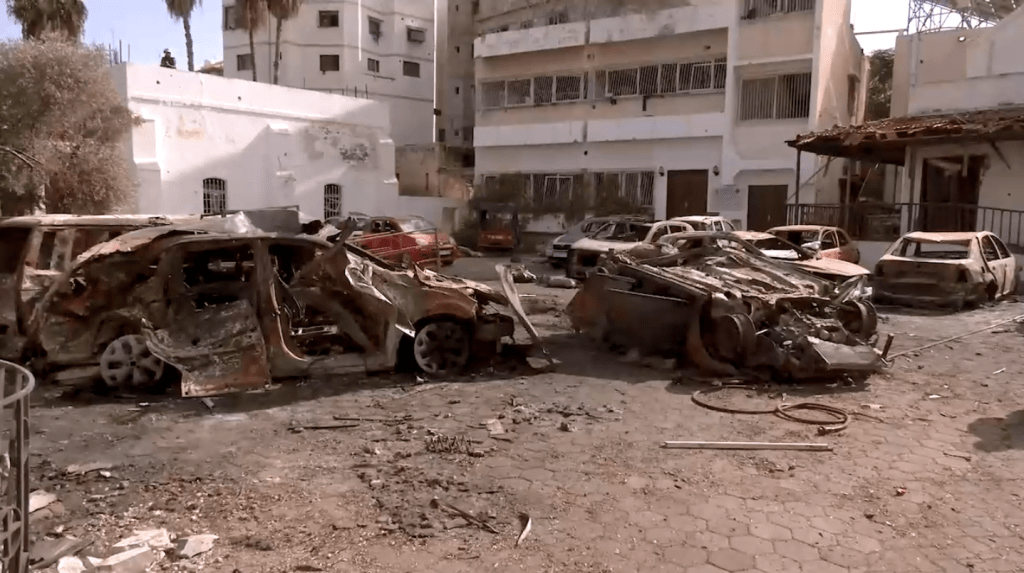
Picture: Tasnim News Agency Licensed under the Creative Commons Attribution 4.0 International license
I WAS born in a land where war wasn’t just a word. it was the weather.
The sky spoke in sirens, the ground trembled with explosions, and hope was something whispered, never declared. I was a child during the Iran–Iraq War, but I remember it as if it were yesterday. You don’t forget the sound of fear. You don’t forget hunger, silence, or the way your parents look at you when they can’t protect you.
Now, decades later, another war has begun. this time between Iran and Israel. The weapons are more advanced, the headlines louder, but the result is the same: destruction, displacement, and despair.
From afar, here in the UK where I now live as a refugee, the news arrives quickly, but the pain travels faster.
And sometimes, even the news doesn’t come. When the internet is cut off in Iran, I can’t reach my mother. I can’t ask if my relatives are safe or if my old neighborhood still stands. The silence becomes heavier than any bomb.
You sit in a small flat in a quiet British town, refreshing the same screen, waiting for a message — any sign that the people you love are still alive. That kind of waiting becomes a war of its own.
This war, like every war, won’t remain on maps or in military briefings.
It will enter memories.
It will shape the futures of children who grow up with nightmares and no language to explain them.
It will create more refugees, people forced to carry both their past and their paperwork in the same hand.
And what of the mothers? I think of them most.
Whether in Tehran, Tel Aviv, Gaza, or Karkuk, they carry the truest weight of war.
They are the ones who wait by doors. Who pray through sleepless nights. Who bury their sons and still feed the living.
I remember my own mother during the Iran- Iraq War. How she wrapped us in her arms when the windows shook and how she smiled so we wouldn’t cry, though her own eyes were full of tears.
Mothers never surrender. But they are always the ones who lose the most.
People often ask: “Whose fault is it?” But that’s the wrong question.
The real question is: “Who pays the price?” And the answer is always the same: ordinary people.
This war, like all wars, is already writing its legacy, not in victory or defeat, but in broken homes, empty classrooms, and lost childhoods.
There is no such thing as a clean war. There is no such thing as a distant war. War always returns, sometimes in body, sometimes in spirit.
I write this not to offer answers, but to offer a voice, the voice of someone who knows what war takes and what it leaves behind.
War does not end where the bombs fall. It ends much later, if ever, in the hearts of those who survive it.
 Exodus
Leave a comment